Union Pacific's Great Excursion Adventure

“Jam on it! (Yeah, yeah… we know, we know…)

arts and leisure, comics and animation, everyday glory, food for thought, movies and TV, music, news and info, office antics, science and technology, sports, style, Whiskey Tango Foxtrot...?!, workout No Comments »

Thursday – 25 February 2010
It’s NBN Comics Thursday.
Finally.
Amen.

One more day, then this week can be put to bed.

After yesterday’s stay in the hinterlands, I got home and cooked dinner – grilled chicken with rice (prepared in cream of mushroom soup) and stir-fried vegetables. While we ate, SaraRules and I watched Justice League: Crisis on Two Earths. It was an adaptation of two stories:

  1. Grant Morrison’s Earth 2 and
  2. Dwayne McDuffie’s story concept to bridge the Justice League and Justice League Unlimited series.

It was a good movie. I was a little disappointed in a couple spots with the voice casting:

  1. William (Billy, Bubba-ho-tep, whatever they’re calling him this week) Baldwin was an… okay… Batman, but wasn’t quite what I expected.  Or, perhaps, he was trying a bit too much to emulate Kevin Conroy. I’m not sure.
  2. Billy Bloom’s portrayal of Ultraman was…. well… I read someone’s critique where they said that he “…sounded like a Jersey Guido.” Spot. On. Assessment.
  3. Mark Harmon’s Superman wasn’t quite right, either. Don’t get me wrong (if I come and go like fashion): I like Mark Harmon; he’s a big part of the reason that I watch NCIS semi-religiously. I think that this might come down to a lack of experience with animated voice acting. It wasn’t “bad,” it just wasn’t as spot-on as I had hoped. But, since it’s Mark Harmon, I’ll give him benefit of the doubt.

One place where I wasn’t let down: James Woods as Owlman. I don’t think they could have made a better choice.

The movie’s plot revolves around a plan by Lex Luthor. Not “that” Lex Luthor. This Luthor comes from a parallel Earth… where he is his world’s last remaining (super)hero. His opposition: The Crime Syndicate of America, a sinister analogue of the Justice League. Luthor goes to Earth-1 to recruit the JLA to fight – and hopefully defeat – the CSA.

As I said above, “It was a good movie.” It was fun, there were nice Easter Eggs for longtime DC fans, there was humor… it was a good package on the whole. I have yet to watch the DCUA short featuring The Spectre, but I’m looking forward to it.

Workout
Last night, SaraRules and I hit the gym:

  • Bench Press: 3 sets/8 reps, 205 lbs
  • Calf Raises: 3 sets/10 reps, 100 lbs
  • Deadlift (barbell): 3 sets/10 reps, 50 lbs
  • Bent-over Rows (dumbbell): 3 sets/10 reps, 35 lbs
  • Shoulder Press (dumbbell): 3 sets/10 reps, 40 lbs
  • Curls (dumbbell): 3 sets/10 reps, 30 lbs

Chew on This: Food for Thought – Black History Month
Today’s personal profile is: Andrew Young
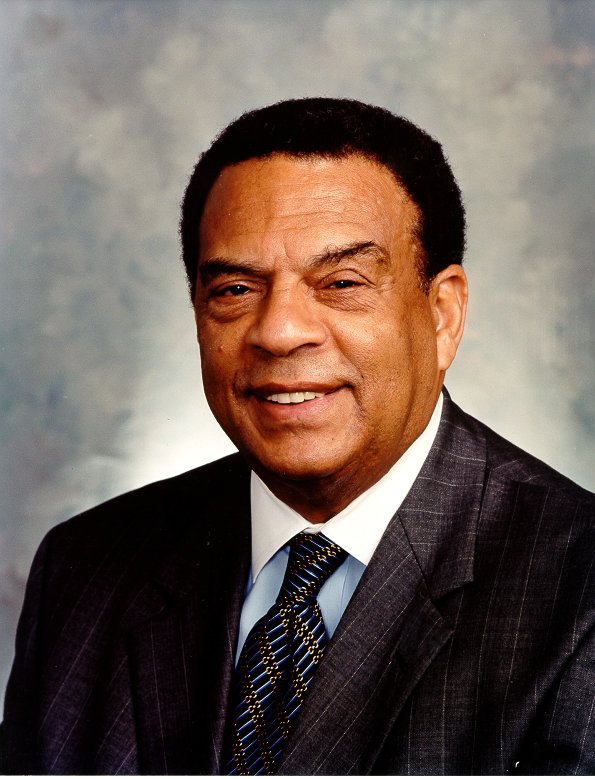
Andrew Jackson Young (born March 12, 1932) is an American politician, diplomat and pastor from Georgia who has served as Mayor of Atlanta, a Congressman from the 5th district, and United States Ambassador to the United Nations.

Young was reared in a middle-class black family, attended segregated Southern schools, and later entered Howard University (Washington, D.C.) as a pre-med student. But he turned to the ministry and graduated in 1955 from the Hartford Theological Seminary (Hartford, Conn.) with a divinity degree.

Young was appointed to serve as pastor of a church in Marion, Alabama. It was there in Marion that he met Jean Childs, who later became his wife. In 1957, Andrew was called to the Youth Division of The National Council of Churches in New York City. He produced a television program for youth called, Look Up and Live, travelled to Geneva for meetings of the World Council of Churches around the United States. Also while in Marion, Young began to study the writings of Mohandas Gandhi. Young became interested in Gandhi’s concept of non-violent resistance as a tactic for social change.

His work brought him in contact with Dr. Martin Luther King, Jr., and Young joined with King in leading the Southern Christian Leadership Conference (SCLC). Following King’s assassination in 1968, Young worked with Ralph Abernathy until he resigned from the SCLC in 1970.

In 1970 Andrew Young ran as a Democrat for Congress from Georgia, but was unsuccessful. He ran again in 1972 and won. He later was re-elected in 1974 and in 1976. During his four-plus years in Congress he was a member of the Congressional Black Caucus, and he was involved in several debates regarding foreign relations including the decision to stop supporting the Portuguese attempts to hold on to their colonies in southern Africa. Young also sat on the powerful Rules committee and the Banking and Urban Development committee.

He was an early supporter of Jimmy Carter, and, after Carter’s victory in the 1976 presidential elections, Andrew Young was made the United States’ ambassador to the United Nations. His apparent sympathy with the Third World made him very controversial, and he was finally forced to resign in 1979 after it became known that he had met with a representative of the Palestine Liberation Organization. In 1981 Young was elected mayor of Atlanta, and he was reelected to that post in 1985, serving through 1989.

Young ran unsuccessfully for Governor of Georgia in 1990, losing in the Democratic primary run-off to future Governor Zell Miller. However, while running for the Statehouse, he simultaneously was serving as a co-chairman of a committee which, at the time, was attempting to bring the 1996 Summer Olympics to Atlanta. Young played a significant role in the success of Atlanta’s bid to host the Summer Games.

Young is currently co-chairman of Good Works International, a consulting firm “offering international market access and political risk analysis in key emerging markets within Africa and the Caribbean.”

Stray Toasters

Namaste.

“More human than human…”

arts and leisure, dining and cuisine, everyday glory, family and friends, food for thought, games, geekery, monkeys!, music, news and info, office antics, science and technology, sports, workout No Comments »

Monday – 22 February 2010
“Ugh.”

That, literally, was my first thought upon waking up this morning. It was immediately followed by a line from the chorus of L.T.D.’s Back in Love Again:

Every time I move, I lose

I attribute all of this to the fact that my sides and thighs are achy from yesterday’s workout. Good for me? Yes. Good training? Yes. Builds character? Sure thing.  But, no matter how you spin it, there’s still that pesky “sore from working out” factor to be dealt with. “That which does not kill me,” I guess…

Last night, SaraRules and I (finally) finished off the last two features on the Planet Earth DVDs. Both were pieces about conservation and sustainability. Both were, as with the entire series, done quite well.

Logan and Sanaz came over for a while after dinner. We had coffee and chatted – including a video-chat with Melissa – for a while. It was a nice way to wind down the evening. I also chatted with last night. He regaled me with tales of his excursion with Bot, Bit and Pixel to an Olympic curling event yesterday; I was laughing so much that I was crying. Trying to explain to SaraRules”why” I was laughing so hard was nigh-impossible for a couple of minutes.

Chew on This: Food for Thought – Black History Month
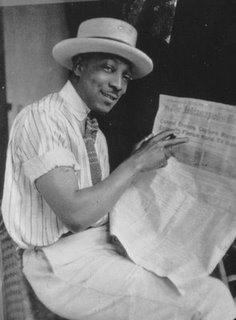
Today’s profile: James Van Der Zee

James Van Der Zee, a leading figure in the Harlem Renaissance, was an African American photographer best known for his portraits of black New Yorkers.

After attending schools in Lenox, he went to New York City (c.1906). Arriving in Harlem as an aspiring violinist, he formed—and performed with—the Harlem Orchestra. From 1909 to 1915 he played in Fletcher Henderson’s band and the John Wanamaker Orchestra (and in an orchestra that accompanied silent films).

On regular return visits from Harlem to his hometown of Lenox, Massachusetts, VanDerZee found himself shooting pictures of the beloved place as a hobby. In 1915 he landed a job as a darkroom technician, and after learning the fundamentals of photography he opened his own studio in Harlem (1916). In 1932, he outgrew his first studio and went on to open the larger GGG Studio, with his second wife as his assistant (since closed, but the building with its original sign can still be seen on the east side of Lenox Avenue between 123rd and 124th Streets in Harlem).

VanDerZee’s work exhibited artistic as well as technical mastery. Thanks to his genius for darkroom experimentation — retouching negatives, for example, and creating double exposures — the demand for his portraiture soon skyrocketed.

Aside from the artistic merits of his work, Van Der Zee produced the most comprehensive documentation of the period.

Although Van Der Zee photographed many of the African American celebrities who passed through Harlem, most of his work was of the straightforward commercial studio variety – weddings and funerals (including pictures of the dead for grieving families), family groups, teams, lodges, clubs, or people simply wanting to have a record of themselves in fine clothes. Many of VanDerZee’s photographs celebrate the life of the emergent black middle class. Using the conventions of studio portrait photography, he composed images that reflected his clients’ dignity, independence, and material comfort, characterizing the time as one of achievement, idealism, and success. VanDerZee’s photographs portray the Harlem of the 1920s and 1930s as a community that managed to be simultaneously talented, spiritual, and prosperous.

National recognition was given to him at age 82, when his collection of 75,000 photographs spanning a period of six decades of African-American life was discovered by the Metropolitan Museum of Art. His photos were featured in 1969 as part of the Harlem on my Mind exhibition. From the 1970s until his death in 1983, Van Der Zee photographed the many celebrities who had come across his work and promoted him throughout the country.

Stray Toasters

Hi-ho, hi-ho…

Namaste.
Sunday ramblings

everyday glory, family and friends, geekery, LEGO and Rokenbok, movies and TV, music, news and info, science and technology, sports, style, toys, workout No Comments »

Sunday – 21 February 2010
Today started out as a lazy day, but it wound up with a little bit of productivity thrown into the mix. I can’t say that’s a bad thing. I slept in this morning, which I didn’t really expect to do. After eating and watching a little Top Gear, SaraRules and I headed to the gym. (That was a good thing.) After the gym, we drove around a bit and scouted a few houses.

And, we still have the rest of the day to do whatever we want.  *nod*

Workout
Today’s workout consisted of:

  • Elliptical: 10 minutes, random program
  • Squats (Smith Press): 3 sets/10 reps, 65 lbs
  • Sit-ups (Incline): 3 sets/20 reps
  • Bench Press: 3 sets/8 reps, 205 lbs
  • Lower Back Extensions: 3 sets/10 reps
  • Reverse Punches: 3 sets/10 reps, 10 lbs
  • Side Bends: 3 sets/10 reps, 10 lbs
  • Curls (Barbell, Reverse grip): 3 sets/10 reps, 50 lbs
  • Overhead Tricep Extensions (Dumbbell): 3 sets/15 reps, 40 lbs
  • Treadmill: 3 minutes

Post-workout weight: 183.5 lbs (13 stone, 1.5 lbs)

Chew on This: Food for Thought – Black History Month
Today’s spotlight isn’t so much a “who” as a series of “whos” and “wheres” – The Underground Railroad.

The Underground Railroad was an informal network of secret routes and safe houses used by 19th century Black slaves in the United States to escape to free states and Canada with the aid of abolitionists who were sympathetic to their cause. It effectively moved hundreds of slaves northward each year — according to one estimate, the South lost 100,000 slaves between 1810 and 1850. Other various routes led to Mexico or overseas.

An organized system to assist runaway slaves seems to have begun towards the end of the 18th century. Churches also often played a role, especially the Religious Society of Friends (Quakers), Congregationalists, Wesleyans, and Reformed Presbyterians as well as certain sects of mainstream denominations such as branches of the Methodist church and American Baptists. In 1786 George Washington complained about how one of his runaway slaves was helped by a “society of Quakers, formed for such purposes.” The system grew, and around 1831 it was dubbed “The Underground Railroad,” after the then emerging steam railroads. The system even used terms used in railroading:

  • People who helped slaves find the railroad were “agents” (or “shepherds”)
  • Guides were known as “conductors”
  • Hiding places were “stations”
  • Abolitionists would fix the “tracks”
  • “Stationmasters” hid slaves in their homes
  • Escaped slaves were referred to as “passengers” or “cargo”
  • Slaves would obtain a “ticket.”
  • Just as in common gospel lore, the “wheels would keep on turning”
  • Financial benefactors of the Railroad were known as “stockholders”.

The Underground Railroad consisted of meeting points, secret routes, transportation, and safe houses, and assistance provided by abolitionist sympathizers. Individuals were often organized in small, independent groups, which helped to maintain secrecy since some knew of connecting “stations” along the route but few details of their immediate area.

For the slave, running away to the North was anything but easy. The first step was to escape from the slaveholder. For many slaves, this meant relying on his or her own resources. Sometimes a “conductor,” posing as a slave, would enter a plantation and then guide the runaways northward. The fugitives would move at night. They would generally travel between 10 and 20 miles to the next station, where they would rest and eat, hiding in barns and other out-of-the-way places. While they waited, a message would be sent to the next station to alert its stationmaster.

The fugitives would also travel by train and boat — conveyances that sometimes had to be paid for. Money was also needed to improve the appearance of the runaways — a black man, woman, or child in tattered clothes would invariably attract suspicious eyes. This money was donated by individuals and also raised by various groups, including vigilance committees.

Due to the risk of discovery, information about routes and safe havens was passed along by word of mouth. Southern newspapers of the day were often filled with pages of notices soliciting information about escaped slaves and offering sizable rewards for their capture and return. Federal marshals and professional bounty hunters known as slave catchers pursued fugitives as far as the Canadian border.

Upon arriving at their destinations, many fugitives were disappointed. While the British colonies had no slavery after 1834, discrimination was still common. Many of the new arrivals had great difficulty finding jobs, in part because of mass European immigration at the time, and overt racism was common.

When frictions between North and South culminated in the American Civil War, many blacks, slave and free, fought with the Union Army.While some later returned to Canada, many remained in the United States. Thousands of others returned to the American South after the war ended. The desire to reconnect with friends and family was strong, and most were hopeful about the changes emancipation and Reconstruction would bring.

Following passage of the Thirteenth Amendment, in some cases the Underground Railroad operated in reverse as fugitives returned to the United States.

Stray Toasters

Yep, that’ll do for now.

Namaste.
“Kick ’em when they’re up… Kick ’em when they’re down… “

Council for Better Driving, everyday glory, food for thought, games, geekery, LEGO and Rokenbok, movies and TV, music, news and info, science and technology, Whiskey Tango Foxtrot...?! No Comments »

Friday – 19 February 2010
9/80 Friday off. Selah.

Of course, the big thing at this point is to decide what I want to do with my day…

Last night, Sararules and I watched The Hangover. I never really had an inclination to see it when it was in theatres, but SaraRules rented it, as Logan was supposed to come over and watch it. He didn’t; we did. It wasn’t as bad as I had feared and it was pretty funny.

sdfs

Chew on This: Food for Thought – Black History Month
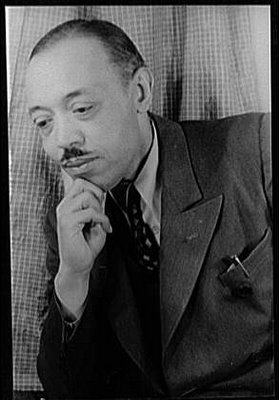
SaraRules brings us today’s profile of William Grant Still:

William Grant Still (May 11, 1895 – December 3, 1978) was an African-American classical composer. He was the first African-American to conduct a major American symphony orchestra, the first to have a symphony of his own (his first symphony) performed by a leading orchestra, the first to have an opera performed by a major opera company, and the first to have an opera performed on national television. He is often referred to as “the dean” of African-American composers.

William Grant Still was born in Woodville, Mississippi. His father, William Grant Still Sr., died when William was 3 months old and his mother, Carrie Lena Fambro Still, took him to Little Rock, Arkansas where she married Charles B. Shepperson and taught high school English for 33 years. Shepperson, his stepfather, nurtured his musical interests by taking him to operettas and buying Red Seal recordings of classical music which the boy greatly enjoyed. The two attended a number of performances by musicians on tour. William Still grew up in Little Rock, and there started violin lessons at age 14. He also taught himself how to play the clarinet, saxophone, oboe, double bass, cello and viola, and showed a great interest in music. His maternal grandmother introduced him to African American spirituals by singing them to him.

His mother wanted him to go to medical school, so Still pursued a Bachelor of Science degree program at Wilberforce University, founded as an African-American school, in Ohio. He conducted the university band, learned to play various instruments and started to compose and to do orchestrations. He also studied with Friedrich Lehmann at the Oberlin Conservatory of Music on scholarship. He later studied with George Whitefield Chadwick at the New England Conservatory again on scholarship, and then with the ultra-modern composer, Edgard Varèse.

Still initially composed in the modernist style, but later merged musical aspects of his African-American heritage with traditional European classical forms to form a unique style. In 1931 his Symphony No. 1 was performed by the Rochester Philharmonic Orchestra under the direction of Howard Hanson, making him the first African-American composer to receive such attention. In 1936, Still conducted the Los Angeles Philharmonic Orchestra and became the first African-American to conduct a major American orchestra.

William Grant Still received two Guggenheim Fellowships. He also was awarded honorary doctorates from Oberlin College, Wilberforce University, Howard University, Bates College, the University of Arkansas, Pepperdine University, the New England Conservatory of Music, the Peabody Conservatory in Baltimore and the University of Southern California.

Still married Verna Arvey, a journalist and concert pianist, in 1939. They remained together until he died of heart failure in Los Angeles, California, in 1978.

Here is an excerpt from his most famous work, his Afro-American Symphony, written in 1935.
http://www.youtube.com/watch?v=Z3JnMapsJMo

Stray Toasters

Time to figure out what I’m doing today…

Namaste.

“Picture Pages, Picture Pages, time to play with Picture Pages…”

arts and leisure, comics and animation, dining and cuisine, everyday glory, food for thought, football, geekery, movies and TV, news and info, science and technology, sports, style, Whiskey Tango Foxtrot...?! No Comments »

Thursday – 18 February 2010
Thank God it’s NBN Thursday!  (And, Technical Friday, too!)

Yesterday wound up being “Comics Wednesday” only; we didn’t go for sushi at lunch and I decided not to pick any up last night after work. S’okay. There’s always next week. As far as the comics aspect of things, it was good. Jake Black was at Dr. Volt’s, signing copies of Supergirl #50, in which he co-wrote a story with Helen Slater.

Once I got home, I fixed a couple of Chicken Cordon Bleu chicken breasts, rice and mixed vegetables for dinner. I watched Human Target while SaraRules finished up Starship Troopers (the book). After that, it was time to dive into the week’s comics. (For reviews of this week’s comics haul – click on over to Four-Color Coverage.) We also watched a bit of The Late Show and The Late Late Show before calling it a night.

Chew on This: Food for Thought – Black History Month
Today’s highlighted person is Wilma Rudolph

Wilma Rudolph was an American athlete who became the first American woman to win three gold medals in track and field during a single Olympic Games, despite running on a sprained ankle at the time.

Wilma was the 20th child of a family of 22, born prematurely and at only 4.5 pounds! She was born with polio and as a result of the diease was crippled and was unable to attend school. Her mother educated her at home in her early childhood, also having to bring her to a hospital for blacks 50 miles from their home twice a week. Wilma eventually attended a segragrated blacks-only school when she was seven. In 1952, 12-year-old Wilma Rudolph finally achieved her dream of shedding her handicap and becoming like other children.

Wilma’s older sister was on a basketball team, and Wilma vowed to follow in her footsteps. While in high school, Wilma was on the basketball team when she was spotted by Tennessee State track and field coach Edward S. Temple. Being discovered by Temple was a major break for a young athlete. The day he saw the tenth grader for the first time, he knew he had found a natural athlete. Wilma had already gained some track experience on Burt High School’s track team two years before, mostly as a way to keep busy between basketball seasons.

While still in high school, Rudolph qualified for the 1956 Olympic Games in Melbourne, Australia. At the age of 16, she was the youngest member of the U.S. team and won a bronze medal in the sprint relay event. After finishing high school, Rudolph enrolled at Tennessee State University where she studied education.

At the 1960 Summer Olympics in Rome she won three Olympic titles; the 100 m, 200 m and the 4 × 100 m relay. Rudolph ran the 100-meter dash in an impressive 11 seconds flat. However the time was not credited as a world record because it was wind-aided. She also won the 200-meter dash in 23.2 seconds, a new Olympic record. After these twin triumphs, she was being hailed throughout the world as “the fastest woman in history”. Finally, on September 11, 1960, she combined with Tennessee State teammates Martha Hudson, Lucinda Williams and Barbara Jones to win the 400-meter relay in 44.5 seconds, setting a world record.

A track and field champion, she elevated women’s track to a major presence in the United States. The powerful sprinter emerged from the 1960 Rome Olympics as “The Tornado,” the fastest woman on earth. The Italians nicknamed her “La Gazzella Nera” (the Black Gazelle); to the French she was “La Perle Noire” (The Black Pearl). Rudolph retired from track competition in 1962 after winning two races at a U.S.–Soviet meet.

In 1963 she was selected to represent the U. S. State Department as a Goodwill Ambassador at the Games of Friendship in Dakar, Senegal. Later that year she was invited by Dr. Billy Graham to join the Baptist Christian Athletes in Japan. There was one “first” accomplishment that was more special than any of the others, however: She insisted that her homecoming parade in Clarksville, Tennessee be open to everyone and not a segregated event as was the usual custom. Her victory parade was the first racially integrated event ever held in the town. And that night, the banquet the townspeople held in her honor, was the first time in Clarksville’s history that blacks and whites had ever gathered together for the same event. She went on to participate in protests in the city until the segregation laws were struck down.

After her successes on the track she became a teacher, coach and sports commentator. In 1963 she married Robert Eldridge and the couple had four children. Wilma wrote her autobiography in 1977, entitled ‘Wilma’ which was later adapted into a television movie.

Stray Toasters

Namaste.

“My milkshake is better than yours…”

comics and animation, dining and cuisine, everyday glory, family and friends, movies and TV, news and info, office antics, politics and law, science and technology, sports, travel, Whiskey Tango Foxtrot...?! No Comments »

Wednesday – 17 February 2010
It’s Comics Wednesday; whether or not there will be “Sushi” remains to be seen…

Last night, SaraRules fixed a very tasty chicken and broccoli alfredo for dinner. After that (and a recorded episode of Castle), we headed to Best Buy (I wanted to pick up HALO Legends) and then to Iceberg (SaraRules wanted a chocolate malted milkshake) and up to the in-laws’.  While visiting the famn damily, we watched a bit of Olympic coverage – snowcross and the men’s figure skating short program. I reaffirmed my conclusion that the color commentary provided by family is far more entertaining than the coverage provided by sportscasters.

Chew on This: Food for Thought – Black History Month
Today’s person of note is Peggy A. Quince:

Peggy A. Quince is the Chief Justice of the Florida Supreme Court; she is the first African-American woman to sit on the state’s highest Court and the third female Justice.

Quince was raised in Chesapeake, Virginia. She had to attend segregated schools, but she excelled as a student. Quince attended Howard University as an undergraduate, and received her Juris Doctorate from the Columbus School of Law at The Catholic University of America in 1975.

Justice Quince began her legal career in Washington, D.C. as a hearing officer with the Rental Accommodations Office administering that city’s new rent control law. In 1977 she entered private practice in Norfolk, Virginia, with special emphasis in real estate and domestic relations.

She moved to Florida in 1978 and opened a law office in Bradenton, Florida, where she practiced general civil law until 1980. In February, 1980, Justice Quince began her tenure with the Attorney General’s Office, Criminal Division. As an assistant attorney general she handled numerous appeals in the Second District Court of Appeal, the Florida Supreme Court, including death penalty cases, the Eleventh Circuit Court of Appeals and the United States Supreme Court. Her thirteen and a half year tenure at that office included five years as the Tampa Bureau Chief.

From 1993 to 1997 she served as a judge on Florida’s Second District Court of Appeal. On July 1, 2008, Quince assumed the office of Chief Justice of the Florida Supreme Court, the first African-American woman to head any branch of Florida government.

Quince is the only Supreme Court Justice in Florida history to be appointed simultaneously by more than one Governor. Because her term began the exact moment that Governor-elect Jeb Bush assumed his office, in order to avoid potential future controversy over her appointment, Bush worked out a joint agreement with lame duck Governor Lawton Chiles whereby they both agreed upon and jointly announced Quince’s appointment in December 1998. When Chiles died of a heart attack a few days later, the task of signing Quince’s commission to office fell to Chiles’ temporary successor, Governor Buddy MacKay. Thus, three Governors were involved in Quince’s appointment.

Presently, Justice Quince is on the executive counsel of the Appellate Section of the Florida Bar and is the Supreme Court liaison to the Workers’ Compensation Committee, the Judicial Ethics Advisory Committee, and the Supreme Court’s Family Court Steering Committee. She has lectured at a number of Continuing Legal Education programs on issues involving search and seizure, probation and parole, use of peremptory challenges, postconviction relief, professionalism and ethics, and the independence of the judiciary.

Stray Toasters

Namaste.
“Put me in, Coach! I’m ready to play today…”

comics and animation, dining and cuisine, everyday glory, food for thought, games, movies and TV, news and info, office antics, science and technology, travel, Whiskey Tango Foxtrot...?!, zombies No Comments »

Tuesday – 16 February 2010
This morning has started off better than yesterday in a number of ways. I’m going to take that as a good omen.

Today is also apparently International Pancake Day.

Last night was rather quiet and low-key: After dinner, and a little TV-watching, SaraRules went to the gym for a swim and I decided that it was an ideal time to take a relaxing soak and do a little reading. Great way to wind down the evening. Later in the evening, I unwrapped LEGO Batman and played through a level. That game is more fun than I expected. (Thanks, SaraRules!)

Chew on This: Food for Thought – Black History Month
Today’s notable person is Satchel Paige:

Leroy Robert “Satchel” Paige was an American baseball player whose pitching in the Negro leagues and in Major League Baseball made him a legend.

Satchel was born Leroy Robert Page to John Page, a gardener, and Lula Page (née Coleman), a domestic worker, in a section of Mobile, Alabama known as Down the Bay. Many ages and birthdates, ranging from 1900 to 1908, were reported for Paige’s birthday. Paige himself was the source of many of these dates. His actual birthdate, July 7, 1906, however, has been known since 1948 when Cleveland Indians owner Bill Veeck traveled to Mobile, Alabama and went with Paige’s family to the County Health Department to obtain his birth certificate.

Two weeks before his twelfth birthday, Paige was arrested for shoplifting. Because this incident followed several earlier incidents of theft and truancy, he was committed to the state reform school, the Industrial School for Negro Children in Mount Meigs, Alabama, until the age of eighteen. During more than five years he spent at the Industrial School, he developed his pitching skills under the guidance of Edward Byrd.

After his release, Paige played for several Mobile semi-pro teams. He joined the semi-pro Mobile Tigers where his brother Wilson was already pitching. He also pitched for a semi-pro team named the Down the Bay Boys. A former friend from the Mobile slums, Alex Herman, was the player/manager for the Chattanooga White Sox of the minor Negro Southern League. In 1926 he discovered Paige and offered to pay him $250 per month, of which Paige would collect $50 with the rest going to his mother. Partway through the 1927 season, Paige’s contract was sold to the Birmingham Black Barons of the major Negro National League (NNL). From 1926 until 1947, Paige played for many teams across the U.S. and in Cuba.

When Branch Rickey signed Jackie Robinson, a teammate of Paige, Paige realized that it was for the better that he himself was not the first black in major league baseball. Robinson started in the minors, an insult that Paige would not have tolerated. By integrating baseball in the minor leagues first, the white major league players got the chance to “get used to” the idea of playing alongside black players. Understanding that, Paige said in his autobiography:

“Signing Jackie like they did still hurt me deep down. I’d been the guy who’d started all that big talk about letting us in the big time. I’d been the one who’d opened up the major league parks to colored teams. I’d been the one who the white boys wanted to go barnstorming against.”

Paige, and all other black players, knew that quibbling about the choice of the first black player in the major leagues would do nothing productive, so, despite his inner feelings, Paige said of Robinson, “He’s the greatest colored player I’ve ever seen.”

Finally, on July 7, 1948, with his Cleveland Indians in a pennant race and in desperate need of pitching, Indians owner Bill Veeck brought Paige in to try out with Indians player/manager Lou Boudreau. On that same day, his 42nd birthday, Paige signed his first major league contract, for $40,000 for the three months remaining in the season, becoming the first Negro pitcher in the American League and the seventh Negro big leaguer overall.

Paige played in as many as 2,500 games and is credited with more than 50 no-hitters. He pitched for six seasons in the majors and was the first star of the Negro leagues to be inducted (1971) into the Baseball Hall of Fame.

Stray Toasters

Namaste.

On a rainy, misty Monday morning…

books, comics and animation, dining and cuisine, everyday glory, family and friends, food for thought, games, LEGO and Rokenbok, movies and TV, news and info, office antics, science and technology, style No Comments »

Monday – 15 February 2010
Welcome to the work week.

Yesterday afternoon/evening wound up being a lot of fun. SaraRules and I went to Rodizio Grill for dinner. Or, as we are fond of referring to it: “Meat o’clock.” Among their meat choices were rattlesnake sausage, elk and chicken hearts. And, of course, there was grilled pineapple – probably the only cooked fruit that I like. We also both indulged in capirinhas. It was all very tasty.

On the way home from dinner, we stopped at the in-laws’ for a few. Then we headed home for end-of-the-weekend relaxing. We watched Starship Troopers and Rocky Balboa. We both like Troopers (despite the fact that it only has tenuous ties to the book by Robert Heinlein) and Rocky Balboa, which I’d never seen, is one of SaraRules’ favorites. It was a good movie and wrapped up the Rocky franchise rather well.

Chew on This: Food for Thought – Black History Month
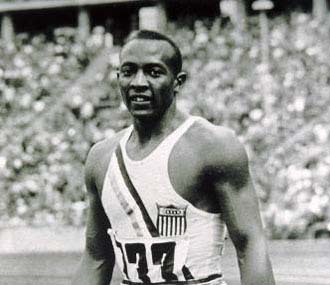
Today’s spotlight person is Jesse Owens

James Cleveland “Jesse” Owens was an American track and field athlete. The seventh child of Henry and Emma Alexander Owens was born in Alabama on September 12, 1913. “J.C.”, as he was called, was nine when the family moved to Cleveland, Ohio, where his new schoolteacher gave him the name that was to become known around the world. The teacher was told “J.C.” when she asked his name to enter in her roll book, but she thought he said “Jesse”. The name stuck and he would be known as Jesse Owens for the rest of his life.

Throughout his life Owens attributed the success of his athletic career to the encouragement of Charles Riley, his junior-high track coach at Fairmount Junior High, who had put him on the track team. Since Owens worked in a shoe repair shop after school, Riley allowed him to practice before school instead. His promising athletic career began in 1928 in Cleveland, Ohio where he set Junior High School records by clearing 6 feet in the high jump, and leaping 22 feet 11 3/4 inches in the broad jump. During his high school days, he won all of the major track events, including the Ohio state championship three consecutive years.

At the National Interscholastic meet in Chicago, during his senior year, he set a new high school world record by running the 100 yard dash in 9.4 seconds to tie the accepted world record, and he created a new high school world record in the 220 yard dash by running the distance in 20.7 seconds. A week earlier he had set a new world record in the broad jump by jumping 24 feet 11 3/4 inches. Owens’ sensational high school track career resulted in him being recruited by dozens of colleges. Owens chose the Ohio State University, even though OSU could not offer a track scholarship at the time. He worked a number of jobs to support himself and his young wife, Ruth. He worked as a night elevator operator, a waiter, he pumped gas, worked in the library stacks, and served a stint as a page in the Ohio Statehouse, all of this in between practice and record setting on the field in intercollegiate competition.

Owens’s performance at the 1936 Berlin Olympics has become legend, both for his brilliant gold-medal efforts in the 100-metre run (10.3 sec, an Olympic record), the 200-metre run (20.7 sec, a world record), the long jump (8.06 metres [26.4 feet]), and the 4 100-metre relay (39.8 sec) and for events away from the track. One popular tale that arose from Owens’s victories was that of the “snub,” the notion that Hitler refused to shake hands with Owens because he was an African American. In truth, by the second day of competition, when Owens won the 100-metre final, Hitler had decided to no longer publicly congratulate any of the athletes. The previous day the International Olympic Committee president, angry that Hitler had publicly congratulated only a few German and Finnish winners before leaving the stadium after the German competitors were eliminated from the day’s final event, insisted that the German chancellor congratulate all or none of the victors. Unaware of the situation, American papers reported the “snub,” and the myth grew over the years.

Just before the competitions Owens was visited in the Olympic village by Adi Dassler, the founder of Adidas. He persuaded Owens to use Adidas shoes and it was the first sponsorship for a male African-American athlete.

On the first day, Hitler shook hands only with the German victors and then left the stadium. Olympic committee officials then insisted Hitler greet each and every medalist or none at all. Hitler opted for the latter and skipped all further medal presentations. On reports that Hitler had deliberately avoided acknowledging his victories, and had refused to shake his hand, Owens recounted:

When I passed the Chancellor he arose, waved his hand at me, and I waved back at him. I think the writers showed bad taste in criticizing the man of the hour in Germany.

He also stated: “Hitler didn’t snub me—it was FDR who snubbed me. The president didn’t even send me a telegram.” Jesse Owens was never invited to the White House nor bestowed any honors by Presidents Franklin D. Roosevelt (FDR) or Harry S. Truman during their terms. In 1955, President Dwight D. Eisenhower acknowledged Owens’s accomplishments, naming him an “Ambassador of Sports.”

After the games had finished, Owens was invited, along with the rest of the team, to compete in Sweden. However he decided to capitalize on his success by returning to the United States to take up some of the lucrative commercial offers he was receiving. American athletic officials were furious and withdrew his amateur status, ending his career immediately. Owens was livid: “A fellow desires something for himself,” he said.

With no sporting appearances to bolster his profile, the lucrative offers never quite materialized. Instead he was forced to try to make a living as a sports promoter, essentially an entertainer. He soon found himself running a dry-cleaning business and then even working as a gas station attendant. He eventually filed for bankruptcy but, even then, his problems were not over and in 1966 he was successfully prosecuted for tax evasion. At rock bottom, the rehabilitation began and he started work as a U.S. “goodwill ambassador.”

Jesse Owens died from complications due to lung cancer on March 31, 1980 in Tucson, Arizona. Although words of sorrow, sympathy and admiration poured in from all over the world, perhaps President Carter said it best when he stated: “Perhaps no athlete better symbolized the human struggle against tyranny, poverty and racial bigotry. His personal triumphs as a world-class athlete and record holder were the prelude to a career devoted to helping others. His work with young athletes, as an unofficial ambassador overseas, and a spokesman for freedom are a rich legacy to his fellow Americans.”

Stray Toasters

Namaste.

“Believe it or not, it’s just me…”

comics and animation, dining and cuisine, everyday glory, family and friends, food for thought, games, geekery, movies and TV, music, news and info, office antics, science and technology, style, Whiskey Tango Foxtrot...?!, workout 1 Comment »

Friday – 12 February 2010
Thank God it’s Friday… even if it’s my “on” Friday. For some reason, I woke up with Rockapella’s Daisy Simone running through my head. It wasn’t a problem, just really an unexpected selection.

Tonight, Darillyn and Stephanie(2) are coming up for a couple of days.  We haven’t seen D since the wedding; and I don’t think that I’ve seen Steph2 since SaraRules lived in Cedar City. It should be a good weekend.

Last night, SaraRules fixed a Thai shrimp curry. It was very tasty. Three guesses what I have for lunch today.

Chew on This: Food for Thought – Black History Month
Today’s spotlight person is: Spike Lee

Shelton Jackson “Spike” Lee is an American film director, producer, writer, and actor. He was born in Atlanta, but moved with his family to Brooklyn, New York when he was a small child. Lee enrolled in Morehouse College where he made his first student film, Last Hustle in Brooklyn. He took film courses at Clark Atlanta University and graduated with a B.A. in Mass Communication from Morehouse College. He then enrolled in New York University’s Tisch School of the Arts. He graduated in 1978 with a Master of Fine Arts in Film & Television.

Lee became a director of promise with his first feature film, She’s Gotta Have It, in 1986. The film was shot in two weeks on a budget of $160,000 and grossed over $700,000 in the U.S.  (The reception of She’s Gotta Have It led Lee down a second career avenue. Marketing executives from Nike offered Lee a job directing commercials for the company. They wanted to pair Lee’s character from She’s Gotta Have It, the Michael Jordan-loving Mars Blackmon, and Jordan himself in their marketing campaign for the Air Jordan line.)

Lee often takes a critical look at race relations, political issues and urban crime and violence. His next film, 1989’s Do The Right Thing examined all of the above and was nominated for an Academy Award for Best Original Screenplay in 1989. Subsequent films, including Malcolm X, Mo’ Better Blues, Summer of Sam and She Hate Me, continued to explore social and political issues. 4 Little Girls, a piece about the 1963 16th Street Baptist Church bombing, was nominated for an Academy Award for Best Feature Documentary in 1997.

In 2006, Lee directed and produced a four-hour documentary for television, When the Levees Broke: A Requiem in Four Acts, about life in New Orleans in the aftermath of Hurricane Katrina.

His most recent feature film release, Miracle at St. Anna (2008), tells the story of four African American soldiers trapped in an Italian village during World War II. This movie was praised for bringing the often overlooked experience of black infantrymen — known as buffalo soldiers — to the big screen.

Lee has never shied away from controversial statements and actions involving race relations:

  • In 2002, after headline-grabbing remarks made by Mississippi Senator Trent Lott regarding Senator Strom Thurmond’s failed presidential bid, Lee charged that Lott was a “card-carrying member of the Ku Klux Klan” on ABC’s Good Morning America.
  • After the 1990 release of Mo’ Better Blues, Lee was accused of antisemitism by the Anti-Defamation League and several film critics.
  • Lee was the executive producer of the 1995 film New Jersey Drive, which depicted young African-American auto thieves in northern New Jersey.
  • In May 1999 The New York Post reported that Lee said of National Rifle Association President Charlton Heston, “Shoot him with a .44 Bulldog.” Lee contended, “I intended it as ironic, as a joke to show how violence begets more violence,” Lee said.
  • In 2003, Lee filed suit against the Spike TV television network claiming that they were capitalizing on his fame by using his name for their network. The injunction order filed by Spike Lee was eventually lifted.
  • In October 2005, Lee commented on the federal government’s response to the 2005 Hurricane Katrina catastrophe:

    “It’s not too far-fetched. I don’t put anything past the United States government. I don’t find it too far-fetched that they tried to displace all the black people out of New Orleans.”

  • Lee sparked controversy on a March 28, 2004 segment on ABC when he said that basketball player Larry Bird was overrated because of his race:

    “The most overrated player of all time, I would say it’d be Larry Bird. Now, Larry Bird is one of the greatest players of all time, but listen to the white media, it’s like this guy was like nobody ever played basketball before him–Larry Bird, Larry Bird, Larry Bird, Larry Bird, Larry Bird.”

  • At the 2008 Cannes Film Festival, Lee, who was then making Miracle at St. Anna, about an all-black U.S. division fighting in Italy during World War II, criticized director Clint Eastwood for not depicting black Marines in his own WWII film, Flags of Our Fathers.
  • During a lecture at Concordia University in Montreal, Canada on February 11, 2009, Lee criticized how some in the black community wrongfully associate “intelligence with acting white, and ignorance with acting black”, admonishing students and parents to maintain more positive attitudes in order to follow their dreams and achieving their goals.

Lee’s production company, 40 Acres & A Mule Filmworks, is located in his childhood neighborhood of Fort Green in Brooklyn.

Workout
Yesterday, Wes and I made an attempt at getting back into the swing of things at the gym. And guess who did his first 300 pound bench press of the year! Mm-hmm, that’s right. Me. Sho’nuff!

  • Elliptical: random/8 minutes
  • Sit-ups (incline): 3 sets/20 reps
  • Reverse Punches: 2 sets/10 reps, 10 lbs
  • Bench Press: 1 set/1 rep, 300 lbs (!)
  • Bench Press: 3 sets/8 reps, 205 lbs
  • Flys: 3 sets/10 reps, 110 lbs
  • Shoulder Press: 3 sets/10 reps, 60 lbs

Post-workout weight (in gym clothes): 189.8 lbs

Stray Toasters

Namaste.

“Bismillah!”

arts and leisure, Council for Better Driving, dining and cuisine, everyday glory, food for thought, games, LEGO and Rokenbok, movies and TV, news and info, politics and law, science and technology, style, travel, Whiskey Tango Foxtrot...?! No Comments »

Thursday – 11 February 2010
It’s snowing outside.

That’s not as radical a statement as “It’s snowing inside,” but considering that we were sunny and relatively clear-skied yesterday, it is a decided change. It’s cold enough that the snow is sticking to the ground, but warm enough that it’s not sticking to the roadways. Thus, the morning commute – and the commutes of those passing below our office windows – was relatively easy. Even so, the Council for Better Driving: Utah would like to remind drivers to be careful on the roads today.

Last night, SaraRules and I went to dinner at Outback Steakhouse. I was having a craving for their oh-so-tasty-yet-so-very-bad-for-you Aussie Cheese Fries. After dinner – a very filling, very satisfied dinner – we headed home for couch time: Human Target, Fringe and 24. When I’d had my fill of things going all ‘splodey, I called it a night.

Chew on This: Food for Thought – Black History Month
Today, there will not be a “Famous Person of the Day.” Instead, there will be two (2) of them:

Maulana Karenga
Ron Karenga (born Ronald McKinley Everett and also known as Maulana Karenga) is an African American author, political activist, and college professor best known as the creator of Kwanzaa.

Karenga was born on a poultry farm in Parsonsburg, Maryland, the fourteenth child of a Baptist minister. He moved to California in the late 1950s to attend Los Angeles City College, where he became the first African-American president of the student body. He was admitted to the University of California, Los Angeles (UCLA) as part of a federal program for students who had dropped out of high school, and received his master’s degree in political science and African studies.

At the beginning of the 1960s, Karenga met Malcolm X and began to embrace black nationalism. Following the Watts riots in 1965, he interrupted his doctoral studies at UCLA and joined the Black Power movement. During this time, he took on the title “maulana”, an Arabic word literally meaning “our lord” or “our master” and has been borrowed into the Swahili language, where it is used also as a title of respect for revered members of a community, religious or secular, roughly equivalent to the English “Sir”. “Karenga” meant “nationalist.” Earlier, he had called himself Ron Ndabezitha Everett-Karenga; Ndabezitha being Zulu for “your majesty.” He formed the US Organization, an outspoken Black nationalist group.

He was awarded his first Ph.D. in 1976 from United States International University (now known as Alliant International University) for a 170-page dissertation entitled Afro-American Nationalism: Social Strategy and Struggle for Community. Later in his career, in 1994, he was awarded a second PhD, in social ethics, from the University of Southern California (USC), for an 803-page dissertation entitled “Maat, the moral ideal in ancient Egypt: A study in classical African ethics.”

Karenga is the former Chairman of the Black Studies Department at California State University, Long Beach, a position he held from 1989 to 2002. He is the director of the Kawaida Institute for Pan African Studies and the author of several books, including his Introduction to Black Studies, a comprehensive black/African studies textbook now in its third edition.

Karenga founded the Organization Us, a Cultural Black Nationalist group, in 1965. He is also known for having co-hosted, in 1984, a conference that gave rise to the Association for the Study of Classical African Civilizations, and in 1995, he sat on the organizing committee and authored the mission statement of the Million Man March.

Anna Kingsley
Anna Madgigine Jai Kingsley (c. 1793 – April or May 1870) was a West African slave turned slaveholder and plantation owner in early 19th century Florida.

Anna Kingsley was born Anta Majigeen Ndiaye in 1793, in a portion of West Africa that was going through a tumultuous war between the majority Wolof people and the minority Fula. Slave raids were frequent occurrences among incessant violence that left many small villages deserted as people were either abducted for the purpose of selling into slavery or they fled in fear for their lives. Following an intensifying of the crisis in 1790, Anta was captured in 1806 when she was about 13 years old; she was  sent to Cuba where she was purchased by and married to Zephaniah Kingsley, a slave trader and plantation owner.

Kingsley freed Anna in 1811 and put her in charge of his plantations in East Florida. For 25 years, Kingsley’s unique family lived on Fort George Island in modern-day Jacksonville, where Anna managed a large and successful planting operation, owning slaves of her own.

After Spain handed control of Florida over to the U.S. in 1822, the new government progressively enacted stricter ordinances separating the races. The mixed-race Kingsley family was directly and negatively affected by these “illiberal and inequitable laws”, as Kingsley stated in his will. Kingsley transferred all their holdings to the three older children and moved to Haiti in 1835. Anna and their youngest son followed in 1838. In all, 60 slaves, family members, and freed employees moved with Kingsley to Haiti to start a plantation called Mayorasgo de Koka; Zephaniah Kingsley died soon after.

Anna returned to Florida in 1846 to participate in the Kingsley estate defense, despite the increasingly tense racial climate in Duval County. The court, however, upheld a previous treaty signed between the U.S. and Spain stipulating that all free blacks born before 1822 in Florida enjoyed the same legal privileges as they had when Spain controlled East Florida. Anna furthermore asked for and was granted the transfer of ownership of slaves who had been sent to the San Jose plantation when the family had moved to Haiti, but her request to rent her slaves to other plantations to maximize her profits was rejected by the courts.

The National Park Service protects Kingsley Plantation, where Anna and Kingsley lived on Fort George Island, as part of the Timucuan Ecological and Historic Preserve.

Stray Toasters

Namaste.

“Lockheed’s already figured that out, sir.” ‘Who’s Lockheed?’ “My dragon.” ‘Your WHAT?!?”

arts and leisure, comics and animation, dining and cuisine, everyday glory, food for thought, games, geekery, movies and TV, news and info, science and technology 2 Comments »

Wednesday – 10 February 2010

This morning started off with me slamming off the alarm and rolling over and falling back to sleep. (There’s a reason that I keep a secondary alarm set on my cell phone: Some mornings, I’m either really tired and/or lazy. This morning was one of those “tired” mornings. I woke up again at 0658, two minutes before the second alarm would go off. While I pondered whether to get up or to wait for the alarm, a couple of car alarms went off outside the window. I couldn’t tell if it one of them was my car or not, so up I got. By the time I got to the living room, both car alarms had stopped… and the cell phone alarm was starting. *sigh* Hell of a way to kick off Comics and Sushi Wednesday.

Last night, SaraRules fixed lasagna for dinner. Vegetarian lasagna. We had discussed adding a vegetarian meal or two to the week’s meals, so it wasn’t a total surprise… but I wasn’t expecting it last night. More importantly, though, it was good.

Chew on This: Food for Thought – Black History Month
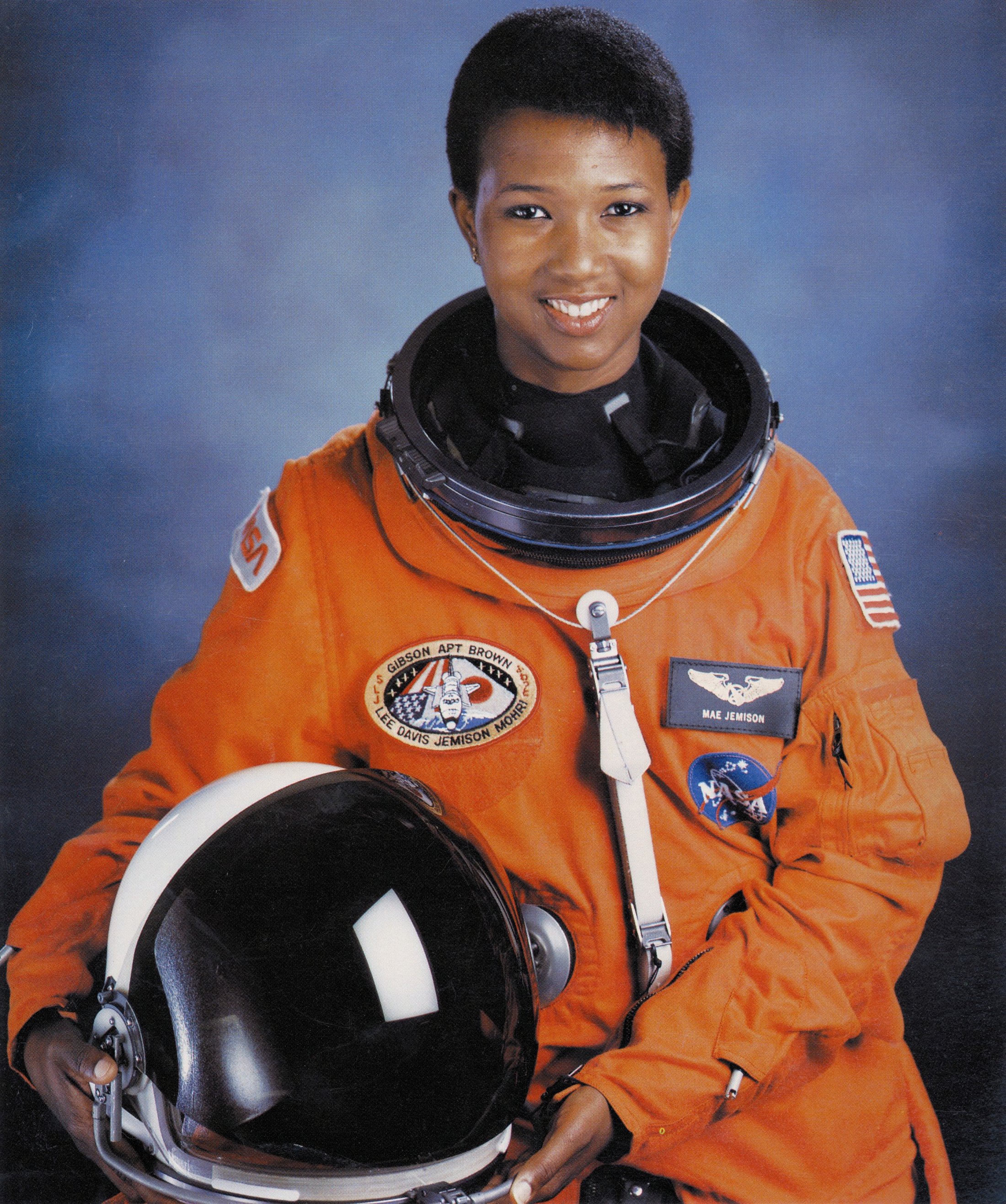
Today’s person of note is Dr. Mae Jemison

Mae Carol Jemison is an African American physician and NASA astronaut, born October 17, 1956, in Decatur, Alabama. The family moved to Chicago, Illinois, when Jemison was three to take advantage of better educational opportunities there. During her time at Morgan Park High School, she became convinced she wanted to pursue a career in biomedical engineering, and when she graduated in 1973 as a consistent honor student, she entered Stanford University on a National Achievement Scholarship. At Stanford, Jemison pursued a dual major and in 1977 received a B.S. in chemical engineering and a B.A. in African and African-American Studies. Upon graduation, she entered Cornell University Medical College to work toward a medical degree.

After completing her medical internship, Jemison joined the staff of the Peace Corps and served as a Peace Corps Medical Officer from 1983 to 1985 responsible for the health of Peace Corps Volunteers serving in Liberia and Sierra Leone.[10] Jemison’s work in the Peace Corps included supervising the pharmacy, laboratory, medical staff as well as providing medical care, writing self-care manuals, and developing and implementing guidelines for health and safety issues. Jemison also worked with the Center for Disease Control (CDC) helping with research for various vaccines.[13]

Following her return to the United States in 1985, she made a career change and decided to follow a dream she had nurtured for a long time. In October of that year she applied for admission to NASA’s astronaut training program. The Challenger disaster of January 1986 delayed the selection process, but when she reapplied a year later, Jemison was one of the 15 candidates chosen from a field of about 2,000. She became the first woman of recent African ancestry to travel in space when she went into orbit aboard the Space Shuttle Endeavour on September 12, 1992.

After leaving the astronaut corps in March 1993, Jemison accepted a teaching fellowship at Dartmouth. She also established the Jemison Group, a company that seeks to research, develop, and market advanced technologies.

Stray Toasters

And now… meeting time.

Namaste.

“They’ve given you a number and taken away your name…”

dining and cuisine, everyday glory, food for thought, games, geekery, LEGO and Rokenbok, movies and TV, office antics, science and technology, zombies No Comments »

Tuesday –  09 February 2010
In the words of the Indigo Girls, “I woke up with a headache, like my head against a board…” Not really sure “why” I had it, but it was there. So, I sprawled on the couch and dozed for a bit before getting ready. That seemed to help somewhat. That… and two Aleve. I’ve sent some coffee in as backup. We’ll see how the morning progresses.

Last night, SaraRules had a Junior League meeting, so I started in on this season’s Jack Bauer Kicks Ass, Growls and Takes Names 24. It was amusing to see Anil Kapoor, whom I last saw as the emcee in Slumdog Millionaire, as the president of an unnamed country in the Middle/Far East. It was good. Now, I just need to finish watching the other eleventy-seven other hours of this season’s episodes…

After SaraRules got home, we watched How to Lose Friends and Alienate People. I’d wanted to see this movie when it hit theatres, but I doubt that even The Flash could have caught it, as it was in and out of theatres so quickly. It starred Simon Pegg as the owner/writer/publisher of a small alternative magazine that lambasts the rich and famous. Through an odd bit of happenstance, he’s given the opportunity to work for the magazine that his idol created. To say that he has “a hard time” fitting in, would be a bit of an understatement, but it makes for some good comedy. While not as satirically biting as Shaun of the Dead (I just realized that I used “biting” to describe a zombie movie… I’m sorry), this movie was rather entertaining and fun.

Chew on This: Food for Thought – Black History Month
Today’s person of note is Roy Innis

Civil rights activist Roy emile Alfredo Innis was born on June 6, 1934 in St. Croix, U.S. Virgin Islands. Emigrating to Harlem, New York City (1946), he dropped out of high school to join the U.S. Army, at 16; he received an honorable discharge at 18. He entered a four-year program in chemistry at the City College of New York. He subsequently held positions as a research chemist at Vick Chemical Company and Montefiore Hospital.

Innis joined the Congress of Racial Equality (CORE) in 1963 and advocated black separatism and community school boards. In 1964 he was elected Chairman of the chapter’s education committee and advocated community-controlled education and black empowerment. In 1965, he was elected Chairman of Harlem CORE, after which he campaigned for the establishment of an independent Board of Education for Harlem. Innis was elected National Chairman of CORE in 1968, and has held the position ever since. Initially Innis, headed the organization in a strong campaign of Black Nationalism. However, he subsequently became prominent as a conservative activist. CORE supported the presidential candidacy of Richard Nixon in 1968 and 1972. Since taking over CORE, the organization’s politics have moved sharply to the right.

Never fully accepted by established African-American civil-rights leaders because of his unpredictable positions and personality, he was dogged by charges from associates of being too dictatorial. The New York attorney general’s office investigated him for alleged misuse of contributions and he was forced to pay back $35,000 to CORE (1981).

In the 1980s Innis twice ran unsuccessfully for the US House of Representatives. In 1988 he made controversial appearances on the Geraldo Rivera and Morton Downey Jr television shows that led to scuffles on camera. In 1993, he ran in the New York City Democratic mayoral primary but lost to incumbent David Dinkins.

Stray Toasters

Tally-ho!

Namaste.

“No one ever listens to the river…”

comics and animation, dining and cuisine, everyday glory, football, games, geekery, movies and TV, music, news and info, science and technology, Whiskey Tango Foxtrot...?! No Comments »

Monday – 08 February 2010
Another work week kicks off a little on the cold side, but there’s sun… so it can’t be all bad.

Loonybin88 just arrived in the office, decked out in his scouting finery. I asked what the occasion was; he informed me that today is the 100th Anniversary of the Boy Scouts of America.

Chew on This: Food for Thought – Black History Month
Today’s entry also comes by way of SaraRules:

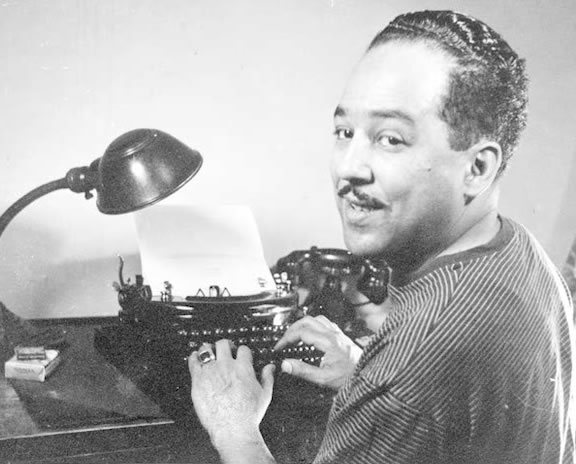
Langston Hughes

Langston Hughes was an African-American poet and playwright, and one of the leading figures in the “Harlem Renaissance”, an explosion of African-American cultural life in the 1920s and ‘30s.

Hughes moved to New York at the age of 19 to attend Columbia University. He left after one year, and traveled to West Africa, Paris, and England.  He returned to the United States in 1925, and enrolled in Lincoln University, a historically black university in Pennsylvania. He earned his B.A. from Lincoln in 1929, and moved back to Harlem, which was his primary home for the rest of his life.

As an author, Hughes was focused on the strength, joy, music, and life of blacks living in America. His writing expresses a great pride in African-American identity, but goes beyond the big-city experience of Harlem and enjoys the diversity of the African-American culture throughout the nation.

This poem, The Negro Speaks of Rivers, was one of his first poems, originally published in 1921, and is his best-known work.

The Negro Speaks of Rivers
I’ve known rivers:
I’ve known rivers ancient as the world and older than the
flow of human blood in human veins.
My soul has grown deep like the rivers.
I bathed in the Euphrates when dawns were young.
I danced in the Nile when I was old
I built my hut near the Congo and it lulled me to sleep.
I looked upon the Nile and raised the pyramids above it.
I heard the singing of the Mississippi when Abe Lincoln
went down to New Orleans, and I’ve seen its muddy
bosom turn all golden in the sunset.
I’ve known rivers:
Ancient, dusky rivers.
My soul has grown deep like the rivers.

Stray Toasters

Namaste.

“You and me and the bottle makes three tonight…”

arts and leisure, cyberpunk/steampunk, everyday glory, family and friends, games, geekery, LEGO and Rokenbok, music, news and info, science and technology, style, toys No Comments »

Saturday – 06 February 2010
Today is Bit’s second birthday.


(taken at our wedding in October)

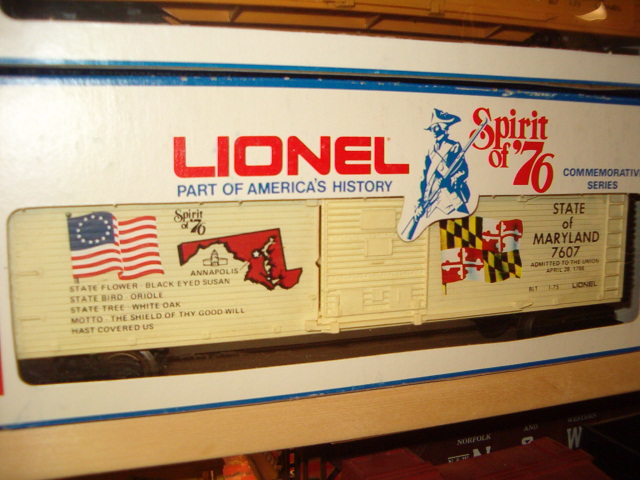
This morning, I got together with Perry and two of his kids and attended The Great Train Expo at South Towne Expo Center (pictures here). The show was smaller than I expected, but it was still a good bit of fun. I managed to find an O Scale Lionel “Maryland” box car, that I couldn’t leave without purchasing:

Chew on This: Food for Thought – Black History Month
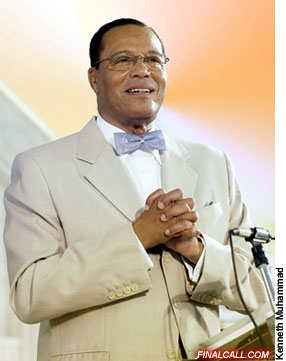
Today’s person is Louis Farrakhan.

Louis Farrakhan, (born Louis Eugene Walcott; May 11, 1933) is the National Representative of the Nation of Islam. He is an advocate for black interests, and a critic of American society. Farrakhan has been both widely praised and criticized for his often controversial political views and rhetorical style.

As a child, he received training as a violinist. At the age of six, he was given his first violin and by the age of thirteen, he had played with the Boston College Orchestra and the Boston Civic Symphony. A year later, he went on to win national competitions, and was one of the first black performers to appear on Ted Mack Original Amateur Hour, where he also won an award. He graduated with honours from the prestigious Boston English High School, where he also played the violin and was a member of the track team. He attended the Winston-Salem Teachers College from 1951 to 1953 but dropped out to pursue a career in music. Known as “The Charmer,” he performed professionally on the Boston nightclub circuit as a singer of calypso and country songs.

In 1955, while headlining a show in Chicago entitled “Calypso Follies,” he first came in contact with the teachings of the Nation of Islam. A friend from Boston, sometime saxophonist Rodney Smith, introduced him to the NOI’s doctrine and he attended the annual Saviours’ Day address by Elijah Muhammad. He joined the Nation of Islam in July 1955, becoming Louis X. The “X” was a placeholder following the dropping of the slave name, referring to the loss of the unknown surname of his slave forefathers, and preceding the Islamic name some Nation members are given later in their conversion.

Louis X first proved himself at Temple No. 7 in Harlem, where he emerged as the protégé of Malcolm X, the minister of the temple and one of the most prominent members of the Nation of Islam. Louis X was given his Muslim name, Abdul Haleem Farrakhan, by Elijah Muhammad, the leader of the Nation of Islam. Farrakhan was appointed head minister of Boston Temple No. 11, which Malcolm had established earlier. After Malcolm X’s break with the Nation in 1964 over political and personal differences with Elijah Muhammad, Farrakhan replaced Malcolm as head minister of Harlem’s Temple No. 7 and as the National Representative of the Nation, the second in command of the organization.

Farrakhan has been the center of much controversy, and critics claim that some of his views and comments have been racist or homophobic. Farrakhan has categorically denied these charges, and has stated that much of America’s perception of him has been shaped by media sound bites. This defense is echoed by religion scholar Mattias Gardell, who argues that, when considered in the context of Farrakhan’s typically lengthy lectures, many of Farrakhan’s controversial comments take on a more nuanced or thoughtful meaning that cannot be conveyed in a sound bite.

Stray Toasters

Time to get ready for some pre-Super Bowl shopping and then to see Utah Symphony, with Big Bad Voodoo Daddy tonight.

Namaste.

“I can see for miles and miles…”

comics and animation, dining and cuisine, everyday glory, family and friends, food for thought, games, movies and TV, music, news and info, science and technology, workout No Comments »

Friday – 05 February 2010
It’s my 9/80 Friday off. Amen.

Last night, we had loonybin88 and his family over for dinner. On the menu: Jambalaya, salad, beans, rice and cornbread. For dessert, we had ice cream over brownies, with ginger snaps. It was a nice way to spend the evening.

Today, Chris is coming over in a little while. That’s right: HeroClix game time. We’re doing an Asgardian battle, as we haven’t played a game with Thor and company. We’ll see how it goes…

Chew on This: Food for Thought – Black History Month
Today’s spotlighted person is civil rights activist Medgar Evers

Medgar Wiley Evers  was born July 2, 1925 in Decatur, Mississippi, the son of James, a small farm and a sawmill worker, Jessie Evers. James, as well as Medgar’s maternal great-grandfather Joseph Evers were two men that also fought for their freedom.

Determined to get the education he deserved after the lynching of a family friend, Evers walked twelve miles to and from school to earn his high school diploma. In 1943 he was inducted into the army along with his older brother Charlie. Evers fought in France, the European Theatre of WWII and was honorably discharged in 1945 as a Sergeant. In 1948, Evers enrolled at Alcorn College (now Alcorn State University), majoring in business administration. In college, he was on the debate team, played football and ran track, sang in the school choir and served as president of his junior class. He received his BA degree in 1952.

Upon graduation, Evers moved to Philadelphia, Mississippi, where he began working as an insurance salesman. He and his older brother, Charles Evers, also worked on behalf of the National Association for the Advancement of Colored People (NAACP), organizing local affiliates in Philadelphia. In 1954, Medgar quit the insurance business; he subsequently applied and was denied admission to the University of Mississippi Law School. His unsuccessful effort to integrate the state’s oldest public educational institution attracted the attention of the NAACP’s national office. Later that year, Evers moved to the state capital of Jackson and became the first state field secretary of the NAACP in Mississippi. As state field secretary, Evers recruited members throughout Mississippi and organized voter-registration efforts, demonstrations, and economic boycotts of white-owned companies that practiced discrimination. He also worked to investigate crimes perpetrated against blacks, most notably the lynching of Emmett Till, a 14-year-old African-American boy who had allegedly been killed for talking to a white woman.

As early as 1955, Evers’ activism made him the most visible civil rights leader in the state of Missisippi. As a result, he and his family were subjected to numerous threats and violent actions over the years, including a firebombing of their house in May 1963. At 12:40 a.m. on June 12, 1963, Evers was shot in the back in the driveway of his home in Jackson. He died less than a hour later at a nearby hospital.

Evers was buried with full military honors in Arlington National Cemetery, and the NAACP posthumously awarded him their 1963 Spingarn Medal. The national outrage over Evers’ murder increased support for legislation that would become the Civil Rights Act of 1964. Immediately after Evers’ death, the NAACP appointed his brother Charles to his position. Charles Evers went on to become a major political figure in the state; in 1969, he was elected the mayor of Fayette, Mississippi, becoming the first African-American mayor of a racially mixed Southern town since the Reconstruction.

Stray Toasters

I should probably start getting a team together before Chris shows up.

Namaste.